The Production Process of Iberico Sausages
If you go into any Spanish home, one thing you'll almost always see is a selection of cold Iberico sausages. Known in Spanish as "Embutidos," these delight the whole family from the youngest member to the oldest. They're an excellent choice for dinner, a snack or as part of a meal for school or work. However, all sausages are not created equal!
Why iberico sausages?
Choosing Iberico sausages means choosing a quality and flavor like no other - and they're healthier too! The secret to both the flavor and the health benefits of Iberico sausages lies in the quality of the animals they come from.
Iberico sausages must be made from pork from at least 50% Iberico pigs which must be either purebreds or first-generation crossbreeds. Fed on a traditional diet and raised according to the highest standards of quality, it's no surprise that the result is something remarkable.
Production of Iberico sausages
Iberico sausages are one of the most obvious and widespread signs of Iberico culture, as well as being one of the most valued meats in the world. Abroad, they're recognized as a uniquely Spanish delicacy with a centuries-long tradition of culinary excellence behind them, while within Spain they're both a common food and a delicacy, the way only a native food can be. They're consumed alone or with bread, and the different Spanish regions produce local specialities.

Slices of Iberico chorizo
The basic raw materials for creating Iberico sausages are lean meat, fat, salt, and paprika, with garlic sometimes used too. Once the animal has been butchered a specialized worker will select the meat and fat by hand and weigh and monitor it to ensure quality.
The meat is then passed through a mincer and kneaded to ensure even distribution, before being mixed with the other ingredients and left to stand at 4°C for about 12 hours. While all this has been happening, intestines have been carefully cleaned and prepared for use as casings.
The meat and flavorings will be stuffed mechanically into these casings and the chorizo is now ready - apart from one thing. It looks like a chorizo, but it will need to be hung in a warehouse for three to five months to cure before it's ready to pass muster as a true Iberico sausage!
Preparation of Iberico loin sausage
Next to Spanish ham, Iberico loin is one of the keynote meats of Spanish cuisine and Iberico loin sausage is much sought-after amongst gourmands. To make an Iberico loin sausage, the loin cut is first removed from the animal and rubbed down with salt, and left to stand for a couple of days.
Next, it's cleaned and the surface salt is striped away, and the meat is bathed in olive oil, garlic, paprika and oregano and left to marinade for two to four days before being minced, stuffed into casings and hung in a cool,dry place for a period of between 60 and 90 days to reach the desired degree of cure. The result is a tasty sausage of unusual quality, widely considered a gourmet treat!

Slices of Iberico sausage
Cured loin sausage is a variant of Iberico loin sausage. A traditional cure is followed, using only saly with no dyes or additives of any kind, and the typical curing time is long - as much as 150 days. This procedure is only performed with loin of the highest quality, and as a result, Iberico cured loin sausage is considered to be one of the bright lights of Spanish cuisine.
Preparation of Iberico cured loin sausage
To prepare the sausage, the basic technique is identical to that employed in making other Iberico sausages. The secret is in the details! The selection of meat and fat, for instance, is just the same. What differs is the herbs and spices used,and the fact that cured loin sausage is boiled prior to curing.
Black pepper, salt, coriander and nutmeg are used in a traditional Iberico cured loin sausage, and the meat mixture is left to marinade for about 24 hours before being left to stand for as long as 40 days, though some producers like to smoke it. After this, the sausage is boiled for a couple of hours in water containing bay leaves, cloves, onions and pepper, before being stuffed into natural casings to be subsequently cured in a cool, dry place.
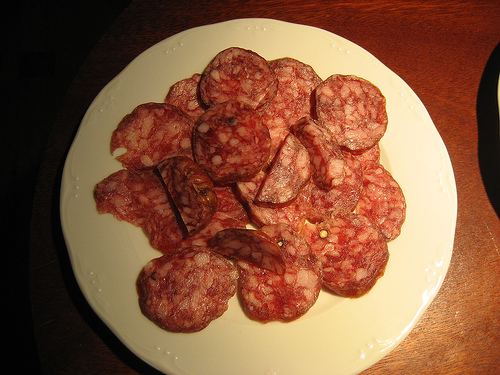
Plate of Iberico sausage
As we can see, the quality of Iberico sausages is determined by the quality of the meat as well as the exquisite care and traditional craftsmanship that go into making the finished article. The best brands keep their secrets close to their chests, while being constantly monitored for quality, so a major brand is a great choice to make sure you're getting the best Iberico cuisine has to offer.
Todo sobre el jamón
Contenido
- 1 Tipos de jamón ibérico
- 2 Cómo consumir jamón ibérico
- 3 Cortar jamón ibérico
- 4 Cómo conservar el jamón ibérico
- 5 Maridaje del jamón ibérico
- 6 Ley de calidad del jamón ibérico
- 7 La Dehesa
- 8 Denominaciones de origen del jamón ibérico
- 9 Propiedades nutricionales del jamón ibérico de bellota
- 10 Recetas con jamón
- 11 Diferencias entre jamón ibérico y jamón serrano
- 12 Diferencias entre paletilla y jamón ibérico
- 13 Diferencias entre jamón ibérico y jamón serrano
- 14 Jamón ibérico y sus competidores en el mundo
- 15 Propiedades nutricionales del jamón ibérico
- 16 Denominación de origen del jamón ibérico
- 17 Zonas de elaboración del jamón y del jamón pata negra
- 18 Jamón cortado a mano o a máquina
- 19 Museos del jamón ibérico en el mundo
- 20 Cata de jamón ibérico: todos los secretos
- 21 Ruta del jamón ibérico
- 22 El jamón ibérico de bellota y su maridaje ideal
- 23 Proceso de elaboración de los embutidos ibéricos
- 24 Historia de los embutidos ibéricos
- 25 IVA para el jamón: preguntas y respuestas
- 26 El jamón en la literatura
- 27 Curiosidades del jamón ibérico
- 28 Cómo conservar el jamón serrano
- 29 Normativa de calidad del jamón serrano
- 30 Elaboración del jamón serrano
- 31 Denominaciones de origen del jamón serrano
- 32 Propiedades nutricionales del jamón serrano
- 33 Recetas con jamón serrano
- 34 Tipos de jamón serrano
- 35 Maridaje del jamón serrano
- 36 Cómo consumir jamón serrano
- 37 Cortar jamón serrano
- 38 Todos los secretos sobre la cata de jamón pata negra
- 39 Cómo elegir un buen soporte jamonero
- 40 Cuál es el mejor jamón pata negra?
- 41 Es correcto el término jamón pata negra?
- 42 Jamón pata negra y dehesa
- 43 Los secretos del maridaje del jamón pata negra
- 44 ¿Cómo saber qué jamón comprar?
- 45 ¿Por qué el buen jamón es tan caro?
- 46 ¿Cómo comprar jamón en tiendas online?
- 47 Mitos y realidades, beneficios y prejuicios del jamón
- 48 ¿El jamón ibérico engorda?
- 49 ¿Qué hacemos con el hueso del jamón?
- 50 ¿Por qué solemos colgar el jamón?
- 51 Jamón y embarazo: ¿Se puede incluir el jamón ibérico en la dieta de las embarazadas?
- 52 El rol del jamón en el crecimiento y desarrollo de los niños
- 53 Consejos para conservar el jamón
- 54 ¿Qué es el perfilado del jamón y por qué se hace?
- 55 Nuevas tecnologías y jamón - Resonancia magnética en la cata del jamón - Imágenes espectrales
- 56 El cerdo ibérico comienza a emigrar
- 57 Embutidos: Origen, composición y clasificación
- 58 Elaboración de jamones y paletas
- 59 Guía de Cata del Jamón Ibérico
- 60 Elementos diferenciales de calidad en jamón y embutidos “ibéricos”
- 61 El mapa del jamón en España
- 62 Propiedades de la grasa del jamón ibérico
- 63 Cómo transportar jamón ibérico y otros alimentos en vuelos internacionales
- 64 Prevalencia de patógenos y beneficios de los ácidos orgánicos en la producción de cerdos